



YouTube is no longer just a video-sharing platform. In 2026, it has fully matured into one of the most powerful search engines in the world, sitting right behind Google itself. With billions of users watching content daily, creators and brands are locked in a constant race to understand how YouTube SEO really works—and more importantly, how the new algorithm thinks.
If you’re still relying on outdated tactics like keyword stuffing, generic thumbnails, or inconsistent uploads, you’re already behind. The YouTube algorithm in 2026 is smarter, more human-like, and deeply focused on viewer satisfaction, behaviour signals, and content authenticity.
In this long-form guide, we’ll break down YouTube SEO in 2026 with fresh algorithm insights, actionable strategies, and creator-tested techniques that actually work. Whether you’re a beginner or an experienced YouTuber, this article will help you rank higher, get more views, and build a sustainable channel..
Why YouTube SEO important in 2026
YouTube is packed with competition. Millions of creators upload videos, and many of them are good. That means quality alone is not always enough—YouTube has to understand who your video is for before it can recommend it widely. That’s where SEO comes in.
In 2026, SEO is less about “tricking” the platform and more about removing confusion. A well-optimized video makes it easy for YouTube to identify the topic, the audience, and the promise of the video. When the platform understands your content clearly, it can test it with the right viewers. If those viewers respond well, you get more reach.
Think of YouTube SEO like putting the correct label on a box. If the label is clear, the box gets delivered to the right place faster. If the label is messy or misleading, the box gets delayed—or returned.
How the YouTube Algorithm Evolved by 2026
Older versions of YouTube ranking were heavily influenced by basic signals—views, clicks, and keyword matching. Creators could sometimes “win” by using a hot keyword, a dramatic thumbnail, and a catchy title. But that caused a problem: viewers clicked, felt disappointed, and left quickly. YouTube lost watch time and trust.
By 2026, YouTube’s systems evolved to focus on viewer satisfaction. The platform studies what happens after the click: Do viewers stay? Do they finish? Do they watch another video after yours? Do they come back later? These patterns help YouTube predict whether your video is truly valuable for a certain audience.
YouTube also became better at understanding content itself. Instead of relying only on tags and titles, it can use signals like transcripts (what you say), visual cues (what appears on screen), and viewer reactions (rewinds, drop-offs, and next-video choices). The goal is simple: recommend videos that keep people happy and engaged.
The Core Ranking Factors for YouTube SEO in 2026
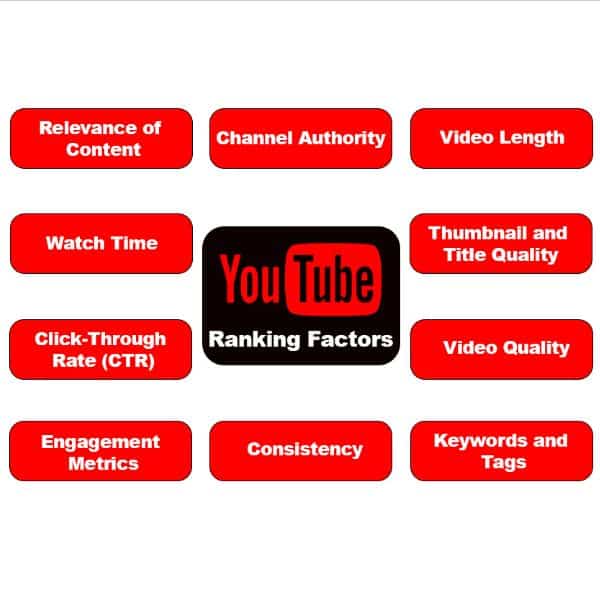
YouTube doesn’t use one “magic” factor. It uses a blend of signals that work together. In 2026, the strongest signals are tied to real viewer behavior—because behavior is hard to fake for long.
Here are the core ranking factors that matter most in 2026:
- Watch time per impression: Not just “how long people watch,” but how much watch time you earn relative to how often you’re shown.
- Audience retention pattern: Where viewers drop off, where they rewind, and whether the retention curve stays healthy.
- Viewer satisfaction signals: Likes, shares, comments, “not interested” feedback, and return visits.
- Session contribution: Does your video lead viewers to watch more on YouTube afterward?
- Topic consistency (channel clarity): Does your channel repeatedly help the same type of viewer on the same topic?
When these signals look strong, YouTube becomes more confident recommending your video to more people. When they look weak, the platform slows down distribution—no matter how good your tags are. These ranking signals closely align with Google’s broader quality standards, as explained in Google’s evolving SEO guidelines: https://smartseotools4u.com/googles-seo-policies-in-2025/
Keyword Research for YouTube SEO
Keyword research still matters in 2026, but the goal is different. Instead of repeating one keyword 20 times, you focus on the viewer’s question and the bigger topic. YouTube is better at understanding related phrases, so your content can rank for many searches when your topic coverage is clear.
Start with YouTube’s search bar. Type a topic and look at suggestions—those are real searches from real people. Next, check competitor videos: what words appear in their titles, and what questions show up in the comments?
The best keywords often come from your audience’s language. The simplest strategy is: use the exact words your viewers use, then explain the answer in a clean and structured way.
Trending Niche and Building Topic Authority
In 2026, YouTube rewards clarity. If your channel is about five random topics, YouTube struggles to figure out who to recommend you to. But if you focus on a niche and serve one type of viewer again and again, YouTube learns your “channel identity” faster.
Trending niches can boost growth, but only if you can stay consistent. A trend that doesn’t match your audience can bring short-term views and long-term confusion. A better approach is to pick a niche you can commit to and then build mini-series inside it.
For example, if your niche is “smartphone tips,” you can create series like “Android basics,” “camera tricks,” and “battery saving.” This helps YouTube connect your videos and recommend them in clusters—often increasing binge-watching and session time.
Optimizing Titles, Descriptions & Tags
Your title should do two jobs: (1) clearly explain what the video delivers, and (2) make the right viewer feel curious. In 2026, clickbait titles often backfire because YouTube watches what happens after the click. If viewers feel tricked, they leave early—hurting retention and trust.
Your description is where you help YouTube understand context. Aim for 150–300 words that summarize the video, include your main topic naturally, and list what viewers will learn. You can also add chapters (timestamps), which makes your video easier to navigate and can improve satisfaction.
Tags still exist, but they are not the main driver. Use a small set of relevant tags for spelling variations and topic clarity. If your content is strong, tags won’t save it—but if your content is strong, tags can still help a little.
Watch Time and Audience Retention
Watch time is still important, but YouTube pays close attention to the retention curve. A strong video keeps viewers interested without wasting time. A weak video causes early exits, even if the topic is good.
To improve retention, focus on three moments: the first 10 seconds, the first minute, and the midpoint. In the first 10 seconds, show what the viewer will get. In the first minute, prove the video is worth watching. At the midpoint, add a fresh example or a quick “next step” so the viewer stays engaged.
Also, cut long intros. In 2026, most viewers decide quickly whether to stay. If you deliver value fast, you’ll earn longer watch time and better rankings.
AI and Semantic Understanding in YouTube SEO
YouTube uses advanced AI systems to understand video content, but these systems are built specifically for video analysis and recommendations. They are designed to interpret meaning, context, and viewer intent.
This process is known as semantic understanding. It allows YouTube to recognize what a video is about by analyzing spoken words, visuals, and viewer behavior together. Because of this, creators do not need to repeat the same keyword many times.
The best approach is to explain ideas clearly, stay on topic, and cover related subtopics naturally. When your content makes sense to viewers, it also makes sense to YouTube’s systems.
A/B Testing (Titles and Thumbnails)
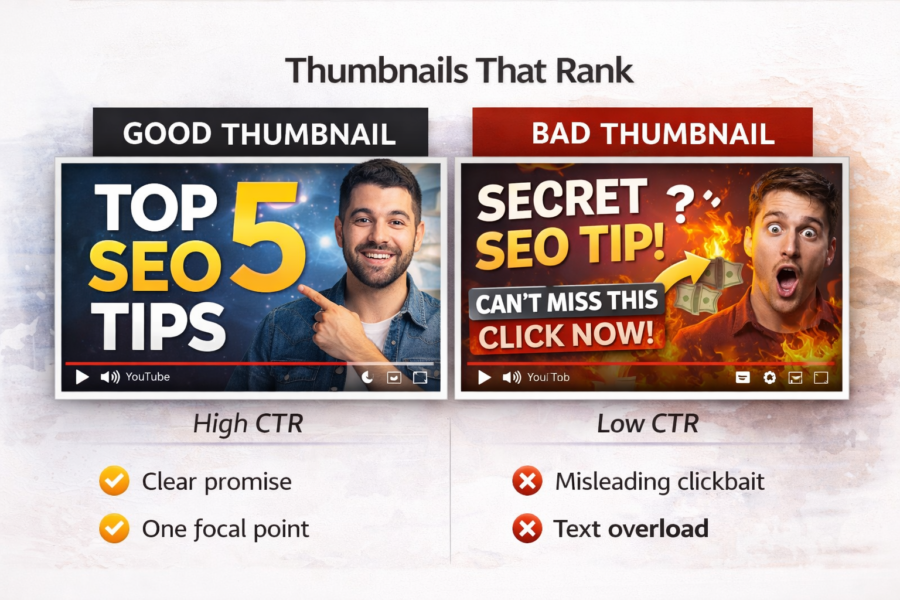
A/B testing is one of the easiest ways to improve YouTube SEO without changing your entire content style. When you test two thumbnails (or two titles), you learn what your audience actually responds to. Small changes can create big improvements over time.
In 2026, YouTube values consistent performance. A thumbnail that gets steady clicks and leads to good retention is better than a clickbait thumbnail that spikes and then collapses. When you A/B test, you aim for the version that attracts the right viewers—not just more viewers.
A simple testing habit: change only one thing at a time (face size, text amount, background clarity). Test for long enough to get real data, then keep what works. Over months, this can lift your whole channel.
Common YouTube SEO Mistakes to Avoid in 2026
Many creators don’t fail because they lack talent—they fail because they follow outdated advice. In 2026, YouTube’s systems are better at detecting content that creates disappointment, confusion, or low satisfaction.
Here are mistakes that often block growth:
- Clickbait titles: They can increase clicks but usually harm retention and trust.
- Weak first minute: Viewers leave early, and the algorithm reduces distribution.
- Topic hopping: Random content makes it hard for YouTube to identify your audience.
- Over-automation: AI-written scripts without human editing can feel generic and reduce engagement.
- Ignoring analytics: If you don’t study retention and CTR, you repeat the same problems.
A simple rule: if your choices make viewers happier, your SEO improves. If your choices make viewers feel tricked or bored, your SEO falls.
The Future of YouTube SEO Beyond 2026
Beyond 2026, YouTube SEO will likely become even more personalized. That means two viewers can search the same topic and see different results based on their watch history, interests, and behavior. The “one-size-fits-all” ranking style keeps shrinking.
We’ll also see more discovery through voice search, smart TVs, and AI assistants. That makes it even more important to speak clearly, structure your video well, and answer questions directly. Clear explanations are not just good for viewers—they’re good for how systems understand and recommend content.
The best long-term strategy is building trust. When viewers return to your channel because they like your style and feel confident in your content, YouTube sees strong signals that you deserve more reach.
Helpful External Resources
These official resources can help you double-check best practices and stay updated:
FAQs
1) Are keywords still important for YouTube SEO in 2026?
Yes, but not in the old “stuff keywords everywhere” way. Keywords still help YouTube understand the topic, especially in your title and first lines of your description. But in 2026, YouTube can also understand related concepts and phrases.
The best approach is to use one main keyword naturally, then support it with related terms and clear explanations. When your video truly covers the topic well, it can rank for many different searches—even if you don’t repeat the exact same keyword a lot.
2) What matters more: click-through rate or audience retention?
Both matter, but retention often becomes the “final judge.” A great thumbnail and title can earn clicks, but if viewers leave quickly, YouTube learns that the video didn’t satisfy the promise.
Think of CTR as the door and retention as the room. CTR gets people inside. Retention convinces YouTube the room is worth recommending again. The best videos do both: strong clicks and strong watch quality.
3) How long should my YouTube description be in 2026?
Aim for 150–300 words for most videos. That gives you enough space to explain what the video covers, add helpful context, and include related keywords naturally. Put the most important summary in the first 2–3 lines, because that area is most visible.
You can also add chapters (timestamps) to improve viewer satisfaction, and include links to related videos or resources. A helpful description supports discovery and keeps viewers confident they’re watching the right video.
4) Can AI-generated content rank on YouTube?
It can, but only if it feels useful and engaging to real viewers. If a video feels generic, repetitive, or “copied,” viewers often leave early. That hurts retention and satisfaction signals, which can limit rankings.
If you use AI tools, treat them like a helper—not the author. Add real examples, your own opinions, and clear editing. The more human your final result feels, the better your audience response will be—and that response is what YouTube ultimately rewards.
Conclusion
To sum it up, YouTube SEO in 2026 is not about secret hacks or quick wins. It’s about creating videos that clearly match what viewers are looking for and keeping them engaged from start to finish. When your content is focused, helpful, and easy to follow, YouTube can confidently recommend it to the right audience.
Strong results come from smart keyword research, clear titles and descriptions, good audience retention, and consistent content within one niche. Testing thumbnails, reviewing analytics, and making small improvements over time all contribute to steady growth.
Most importantly, SEO only works when you take action. Start by improving one existing video, tightening your introduction, or testing a new thumbnail. Step by step, these efforts build trust with viewers—and when viewers trust your content, YouTube is far more likely to help your channel grow.


