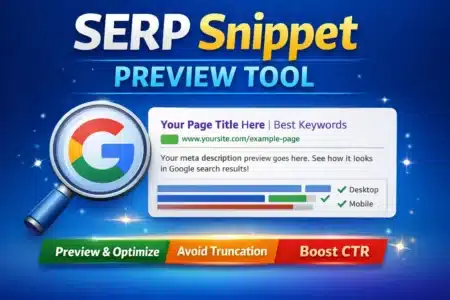
The Best Free Online META SEO Description Generator Tool in 2025 has become an essential asset for website owners, bloggers, and digital marketers aiming to compete in increasingly crowded search results. As Google’s algorithms continue to prioritize user intent and relevance, a well-optimized META description plays a key role in improving click-through rates (CTR). Free META SEO description generator tools help create keyword-rich, properly structured, and engaging descriptions that align with Google’s best practices, ensuring your pages attract attention and encourage users to click.
Modern META SEO description generator tools go beyond simple text creation. They are designed to analyze keywords, match search intent, and maintain optimal character limits while preserving readability and clarity. By automating this process, these tools save time, reduce errors, and support a more consistent SEO strategy. In 2025, using a reliable free META SEO description generator is not just a convenience—it is a strategic advantage that helps improve visibility, engagement, and long-term organic growth.
What is a META SEO Description?
The META SEO description is a small element with a powerful influence—yet it is often overlooked. This short line of text is the first conversation your page has with a potential visitor. In just a few seconds, it decides whether someone clicks your link or scrolls past it. As we move into 2025, optimizing META SEO descriptions is no longer optional; it plays a critical role in improving visibility, strengthening rankings, and drawing the right audience to your website.
Crafting an effective META SEO description may appear technical at first, but in reality, it is far more accessible than many expect. Today’s digital landscape offers a range of free and intelligent tools that simplify the process, allowing you to generate clear, compelling descriptions with ease. These tools save valuable time while ensuring your content aligns with evolving search engine standards. In the sections ahead, you will discover why these tools are indispensable to modern SEO strategies—and how they can quietly transform the way your website performs in search results.
Why You Need a Free Online META SEO Description Generator Tool
You need a Free Online META SEO Description Generator Tool because the META description is often the first impression your content makes in search results. In a space where users decide within seconds whether to click or scroll, a clear, compelling, and keyword-optimized description can significantly improve your click-through rate (CTR). Writing effective META descriptions manually for every page can be time-consuming and inconsistent, especially when managing large websites. A free online tool simplifies this process by generating structured, search-friendly descriptions that align with Google’s SEO guidelines.
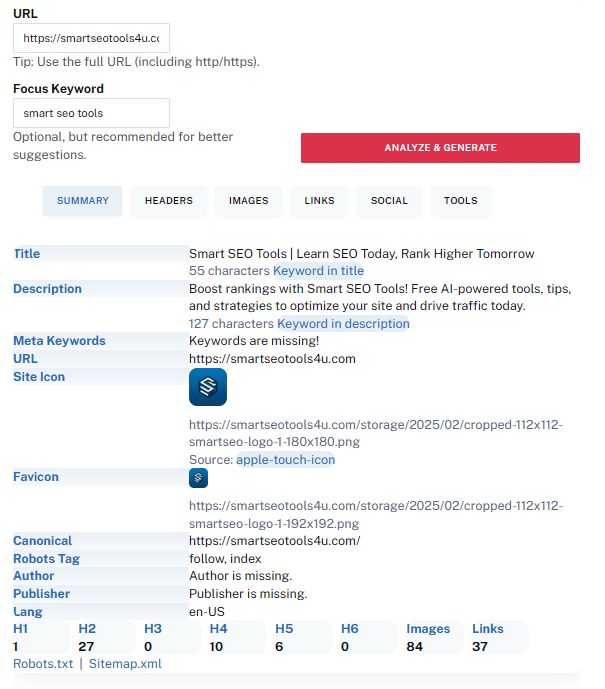
Beyond convenience, these tools help maintain consistency and strategic focus across your entire site. Modern META SEO description generators are designed to consider character limits, keyword relevance, and user intent—ensuring each description remains readable while still optimized for search engines. In an era where competition for visibility is intense, using a free META SEO description generator allows you to work smarter, save time, and strengthen your overall SEO performance without added cost.
Key Features to Look for in an SEO Tool
When choosing a META SEO description generator tool, certain features stand out as must-haves. First and foremost, look for tools that allow customization. While automated suggestions are helpful, having the ability to fine-tune the output ensures your descriptions feel authentic and aligned with your brand voice.
Another critical feature is integration with popular platforms like WordPress or Shopify. Seamless integration makes it easier to implement changes directly from your CMS. Additionally, prioritize tools that provide analytics reports. Understanding how well your META descriptions perform can guide future optimizations and ultimately boost your rankings in 2025.
How to Write Killer META SEO Descriptions That Boost Your Rankings in 2025
Writing killer META SEO descriptions in 2025 and beyond is about mastering clarity, relevance, and intent within a very limited space. While META descriptions do not directly influence rankings, they strongly affect click-through rates, which in turn signal content relevance to search engines. A high-performing META description clearly reflects the page’s purpose, includes primary keywords naturally, and speaks directly to the searcher’s need. When users instantly recognize value in your snippet, they are far more likely to choose your link over competing results.
To create META descriptions that truly perform, focus on writing for humans first and algorithms second. Keep your text within the optimal character range, use active language, and include a subtle call to action that invites engagement without sounding promotional. As search engines evolve, intent alignment and readability will matter more than keyword density. In 2025 and beyond, killer META SEO descriptions will be those that combine precision with personality—short, meaningful lines that promise clarity, relevance, and real value before the first click even happens.
Common Mistakes to Avoid When Creating META Descriptions
One common mistake is stuffing your META SEO descriptions with too many keywords. Not only does this look spammy, but it can also hurt your rankings. Search engines penalize keyword stuffing because it detracts from the user experience. Instead, focus on incorporating keywords naturally and contextually.
Another pitfall is neglecting mobile users. Many people browse on smartphones, so ensure your descriptions are concise and scannable. Avoid vague statements like “Click here” and opt for specific phrases that highlight value. By avoiding these errors, you set yourself up for success in 2025 and beyond.
The Impact of META SEO Descriptions on Click-Through Rates (CTR)
Your META SEO description directly influences your CTR, which measures how often people click on your link after seeing it in SERPs. A compelling description acts as a hook, drawing users in and convincing them to explore further. Studies show that well-crafted META descriptions can increase CTR by up to 30%.
To maximize impact, experiment with different tones and formats. Some industries benefit from humor, while others require professionalism. Track your performance over time to identify patterns and refine your approach accordingly. Remember, higher CTRs signal authority to search engines, indirectly boosting your rankings in 2025.
How AI-Powered Tools Can Supercharge Your SEO Efforts
AI-powered tools have transformed the way SEO strategies are planned and executed, turning what was once a manual and time-intensive process into a smarter, data-driven workflow. By analyzing vast amounts of search data in real time, these tools identify keyword opportunities, user intent patterns, and content gaps that are often missed by traditional methods. This allows marketers and content creators to make informed decisions faster, optimize pages with greater precision, and stay aligned with constantly evolving search engine algorithms.
Beyond analysis, AI-powered SEO tools enhance execution and scalability. From generating optimized META descriptions and content outlines to improving on-page structure and technical SEO signals, AI helps maintain consistency without sacrificing quality. It adapts to trends, predicts performance, and refines strategies based on measurable outcomes. In an increasingly competitive digital landscape, AI is not just an enhancement to SEO—it is a force multiplier that enables sustainable growth, higher visibility, and long-term search performance.
Tips to Maximize Your META SEO Strategy Beyond 2025
Looking ahead, diversification will be key to sustaining long-term success. Don’t limit yourself to traditional META SEO practices; explore emerging trends like voice search optimization and video metadata tagging. Tools that support multimedia content creation can give you a competitive edge.
Additionally, prioritize ongoing education. SEO evolves rapidly, and staying informed ensures you’re prepared for whatever comes next. Follow reputable blogs, attend webinars, and network with industry professionals to keep your skills sharp. With dedication and the right tools, you’ll continue to thrive well beyond 2025.
FAQs
When it comes to optimizing your website for search engines, questions often arise about the best practices and tools available. Here, we address some of the most common queries related to META SEO description generator tools in detail. These answers will help you better understand how these tools work, their benefits, and how to use them effectively to boost your rankings in 2025.
Q1: Are free META SEO description generators reliable?
Free META SEO description generators are generally reliable, but their effectiveness depends on the quality of the tool and its underlying technology. Many reputable platforms invest heavily in developing algorithms that analyze content and suggest optimized descriptions based on current SEO trends.
Q2: Can I edit generated META descriptions?
Absolutely! Editing generated META descriptions is not only possible but highly recommended. While META SEO description generator tools provide excellent starting points, they aren’t perfect. The suggested text may need tweaking to better fit your brand voice, target audience, or specific messaging goals. For example, if the tool generates a generic description like “Find tips on gardening,” you could refine it to say, “Discover expert gardening tips to grow lush plants effortlessly.”
Q3: Do META descriptions affect SEO rankings directly?
META descriptions themselves do not directly influence SEO rankings. Search engines like Google have clarified that META descriptions are not a ranking factor. However, they play a crucial indirect role in improving your site’s performance. A well-crafted META description boosts click-through rates (CTR), which signals to search engines that your page is valuable and relevant to users.
For example, if two pages rank similarly for a keyword, the one with a compelling META description is more likely to attract clicks. Higher CTRs can lead to improved rankings over time because search engines interpret this as a sign of user satisfaction. Therefore, while META descriptions don’t directly impact rankings, their ability to drive traffic makes them an essential part of your overall SEO strategy.
Q4: Should I use the same META description across multiple pages?
No, using the same META description across multiple pages is a big no-no. Each webpage should have a unique META description tailored to its specific content and purpose. Duplicate META descriptions can confuse search engines and dilute your SEO efforts. For instance, if multiple pages share identical descriptions, search engines may struggle to determine which page is most relevant to a user’s query.
Q5: How frequently should I update my META descriptions?
Updating your META descriptions periodically is a smart practice, especially for evergreen content or pages that consistently drive traffic. Over time, trends, keywords, and user behavior evolve, so refreshing your descriptions ensures they remain aligned with current expectations. For example, if a new trend emerges in your industry, updating your META descriptions to include trending keywords can enhance visibility.
Conclusion
Your website rankings in 2025 and in beyond, will improve significantly through the development of expert META SEO description skills as described in this article. This guide provides all necessary steps to succeed by explaining purpose and offering free online tools. When you write memorable descriptions for audiences you need to keep creativity together with consistency as two equally important elements.
Make sure to monitor your performance while modifying your tactics according to results. SEO develops as an ever-changing field so adaptability will maintain your continued growth. The right approach combined with available resources enables you to achieve high-level visibility.